Tuesday, May 1, 2012

"Jo-hassle-burg"


The inner Boy Scout in me came out this week as I went camping in the Pilanesberg National Park with Gerhard, Marlize, the girls, and Marlize's sister's family. There were national holidays on Friday and Tuesday (coincidentally Monday was a quasi-holiday) making for a long, five-day weekend. I drove out to Gerhard's on Thursday night so that we could set out early on Friday morning for the Pilanesberg National Park, which is about two hours northwest of Johannesburg, in the Northwest Province. After we arrived on Friday morning, we set up our campsite: tents, tables, drying racks, cooking gear, et cetera (fortunately, each site had electricity, which made "roughing it" a little less rough). After Marlize's sister's family arrived and set up camp we went for a late afternoon drive through the park. Pilanesberg and the surrounding area is beautiful; the contrasting colors, the rolling hills and mountains, and the vegetation is breath-taking.

On Saturday, we took a long route through the park on our way to "Sun City." Sun City is a resort settled in the valley of the Pilanesberg Mountains. It is a "Las Vegas"-esk resort, created under Apartheid to cater to the gambling desires of South Africans. It was built in a non-white area, where gambling was legal (which is why it is so far from Johannesburg). The resort is massive, with casinos, a cinema, a water park, and a themed-five star hotel, "The Lost City." It was impressive to see the creativity involved in designing this "oasis" in the middle of the mountains. We spent the afternoon at the water park, soaking up the warm weather (a good 5-6 degrees Celsius warmer than Johannesburg). Gerhard, Marlize, and I explored "The Lost City" hiking through a trail with water falls, lakes, and vegetation that eventually lead to a massive hotel that looked as if it were in a jungle in Imperial India.

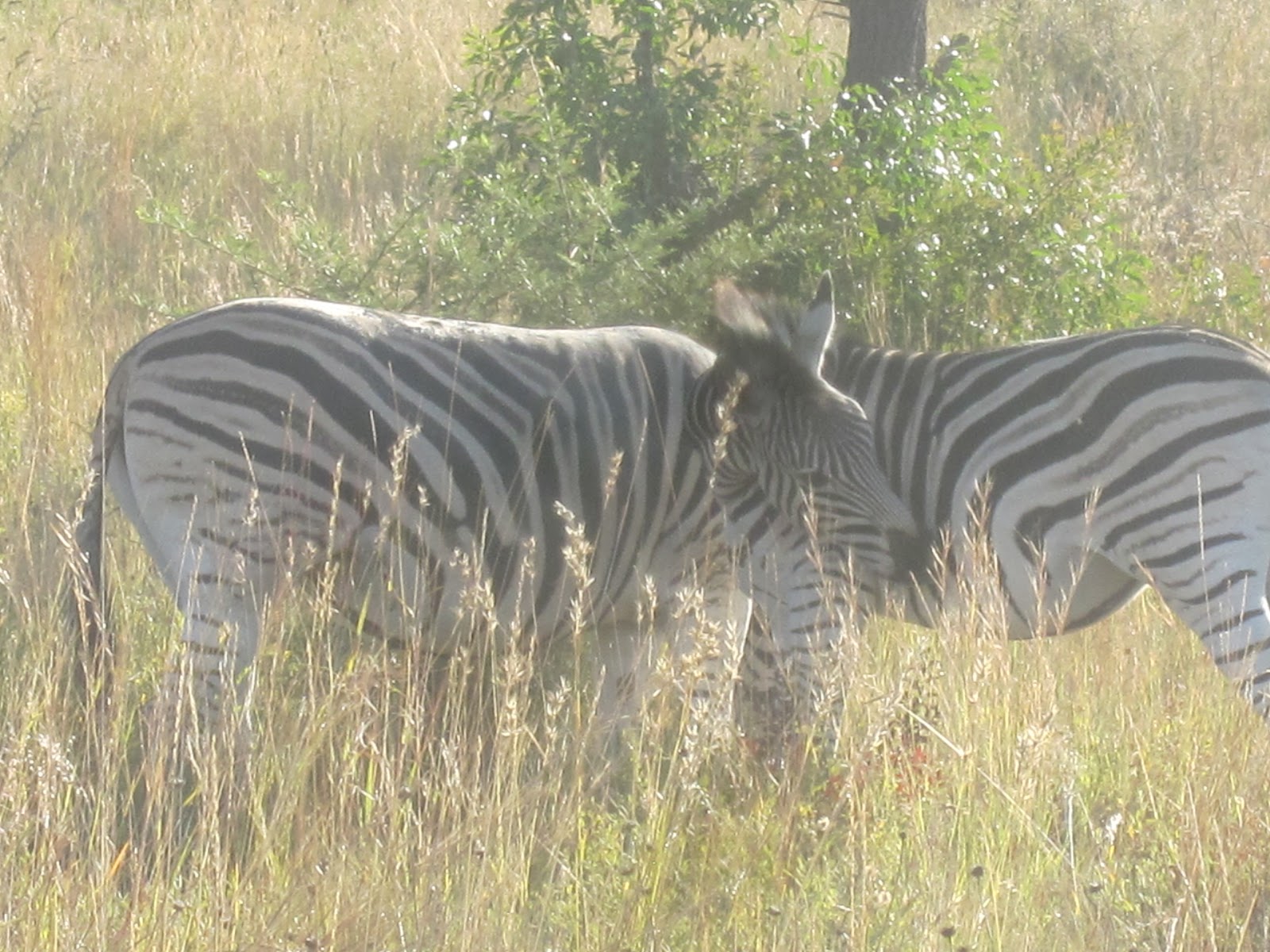
We were fortunate the first few trips into the park to see a lot of animals; so much so that seeing an elephant or a giraffe became less awe-inspiring (not that it wasn't special, but we were on a mission to find more rare animals, say lion or leopard). On Sunday morning, we set off to the park as it opened at 6:00am. As we trekked through the park, we came to a family of rhinoceros and watched them graze. It was incredible how tame they were and how close to the trail they were (unlike other "safaris" you couldn't make your own trail through the veld). After a few hours of watching a variety of animals, we went back to the campsite to make breakfast, and then went out again. We ran into a traffic jam, as a lone, male elephant was blocking the road. A tour bus, determined to give its riders the closest (and most dangerous/stupidest) view, decided to pass all of the stopped cars. Intimidated, the elephant charged the bus, stopping short of ramming it (there are stories of elephants turning over cars). It's sad that these companies have to go to such lengths to please clientele (i.e. see a lot of animals, since they pay so much). After our late-morning trek through the park, we went back to the camp and Gerhard and Steven (Gerhard's brother-in-law) made "potkie" (p-oy-kee) - a dutch oven layered stew that cooks over charcoal for many hours (and you don't stir it). We had a wonderful, hearty last meal together before leaving the next (Monday) morning.

Final Random Thoughts:
  • Overall, we saw (in no particular order): elephant, rhinoceros, hippopotamus, giraffe, zebra, wildebeest, warthog, jackal, kudu, springbok, baboon, and impala.
  • Gerhard and Marlize really know how to camp, they were wonderful "hosts"… we had a wide variety of food/drink and they had some neat camping gear. I am looking forward to "Round Two" as we camp in the Kalahari in June.
  • It was really nice to get out in nature and live more simply for a few days.
  • MTN, a South African cellular company sponsored the weekend at Sun City (the South African Music Awards, were presented by MTN and took place at Sun City). One of the MTN DJs that was playing music at the water park kept referring to Johannesburg as "Jo-hassle-burg" - lame, but funny.
Packed and ready to go!
Campsite 


My tent! 
South Africa's raccoons - meerkats 
Entrance into the park
Hippo

Taking a break :)


Sunday, April 22, 2012

Don't Eat the Marshmallow

It's incredible to think that I've been here for nearly three months (on 26 April); it has been a wonderful journey so far and I have cherished the many new experiences. I am looking forward to my future work at the university as well as some exciting trips planned. This past week, Giulia and I finalized her trip in June. We are going on a two-week road trip, covering nearly 4250km, visiting: Kimberley, the Kalahari Desert (Botswana), Ai-Ais Springs, Fish River Canyon (Namibia), Cape Town, Stellenbosch (wine country), Oudtshoorn, Plettenberg Bay, Port Elizabeth, and Addo (Elephant Park). We're going with Gerhard and family for the first leg of the trip (Kimberely, Botswana, and Namibia), which should be a lot of fun… I think we'll get a merit badge for sleeping in the Kalahari with all of the animals! Also, I'm looking forward to seeing Onkel Theodor and Tante Magdalena in Cape Town, as well as our dear family friends, Raymond and Sylvia in Port Elizabeth. It should be an incredible trip!


I went to the University of the Witswaterand's theatre production of The Hypochondriac (or The Imaginary Invalid) by Moliere on Thursday. It was a hilarious, well-performed rendition; I enjoyed how they adapted the play, written in 1683 (French), to modern day South Africa as well. On Friday night, one of the Fulbrighters hosted a cocktail party for her birthday. Rob and Ben (from Pretoria) came down and we grabbed dinner before heading to the party. The party had a nice mixture of Americans, South Africans, and Dutch. On Saturday I headed to Benoni to see Gerhard and family and go to a East Rand Youth Orchestra fundraiser (Maike and Tasmin, Gerhard and Marlize's daughters play in the orchestra). It was a beautiful event at a country club; the orchestra had a performance, then there was wine tasting/snacks and mingling. The orchestra was wonderful - to be so talented at such a young age! It was great to see the family, support the girls, and talk about our camping trip next weekend (Pilansberg).


Marshmallows

I appreciate teaching the future educators at Wits because it allows for me to reflect on my own experiences in Chicago, with my Room 306 "Buckeyes." Last year at this time, as I was nearing the end of my Teach for America commitment, I was focused on finishing up the school year strongly and then moving on from Chicago. The "hectic-ness" of the end of the year, moving from Chicago, and leaving friends, did not present many opportunities for self reflection (or maybe I wasn't in the right frame of mind). When I teach my New Literacies for Teachers course, I try to present my students with strategies, advice, and teacher stories in order to give the coursework greater meaning. This, in turn, has allowed me to reflect on my own teaching practices, my own failures, as well as successes.


I feel like my students were all taught in a similar style - very "hands off" and more traditional (e.g. copy notes on the board while the teacher sits at his/her desk, not being encouraged to think for oneself, et cetera). It has been a welcoming shock to hear my students' reactions to my teacher stories and/or advice. For instance, I shared with my student's one piece of advice I'll never forget, "get to know your students." Seeing my struggle during my first year of teaching, my assistant principal pulled me aside. He said: "Fry, you're thinking too much. The best way to get your students' respect and trust is to get to know them. Go throw the football with them, eat lunch with them… get to know their story." Now, this seems intuitive, but when confronted with the stresses of teaching, teachers often lose sight of the human-side of teaching.


One of my focuses this week was investment in the classroom. I encouraged my students to not only continually build a report with their students, but also invest them in their "plan" for academic success. A method I used with my Room 306 "Buckeyes" was the Stanford Marshmallow Experiment. I introduced my students to the experiment the first week of school, giving each student (in Chicago) a marshmallow. I told them that they could eat the marshmallow now or wait ten minutes, not eat their marshmallow and earn a second marshmallow. I watched some of my sixth graders struggle to control their over-excited mouths, with many students giving in (who could refuse a puffed cylinder made of high-fructose corn syrup?!). This experiment was the same model as a Stanford researcher in the 1960s. The researcher followed up with the same students nearly twenty years later and the results speak for themselves: those students who waited for the second marshmallow were overwhelmingly more successful (in terms of finances and education). Now, this is not to say that this is a foolproof experiment, but with sixth graders it's simple enough that they can grasp the concept. The point is, students who can exhibit self-control are more successful. I told them that there will be "things" throughout the year that they don't necessarily want to do (e.g. homework or study). If they persevere, they will be rewarded (higher grades, better high school, college admittance, graduation, good job). I used this as an investment tool throughout the year, with "Don't Eat the Marshmallow" signs around my classroom and the school (with the other classes having no idea what I was talking about). I modeled for my students at Wits the same investment strategy, which they really enjoyed (not just because I gave them marshmallows). At the end of the day, I think my university students gain more from these types of experiences. 
Poster for Room 306 Buckeyes


The Hypochondriac 
The East Rand Youth Orchestra Fundraiser


Sunday, April 15, 2012

Be careful when you fight the monsters, lest you become one.

It was nice to get back after a great break and get back "in the swing of things" at Wits. The students have three more weeks of classes before taking a four-week "teaching experience" break. During this time, all of the education students will go into schools around Johannesburg to observe and student-teach. I'm really looking forward to this experience; I'll be paired with a group of students and will observe their lessons throughout the month, providing feedback and problem shoot. I think that this is where a lot of the learning happens, rather than in the classroom. Basically, the students will take their theoretical knowledge from the classroom and try it in the "real world." There's a steep learning curve, particularly because you have to adapt quickly or you'll sink in the classroom. I look forward to helping them become better teachers through mentoring and modeling.

Aside from work, I enjoyed the week and the weekend: On Thursday night I went to a trivia night at a local pub with a fellow Fulbrighter and some friends. I enjoy trivia night, because well, I like seeing how my random knowledge is applicable in a meaningless trivia game at a bar. However, Thursday night wasn't "meaningless" - the game was sponsored by a SA cell phone company, with first prize being new Blackberry(s) and second place a $100 bar tab. There were 23 teams, with the stipulation that members had to be under 35 (a marketing ploy). In any event, my team, the "Blackberry Liberation Front (BLF)" started the first three rounds in first place (out of five rounds). Then, came the music round. I feel like I have a wide-range of music knowledge; my iTunes library is not genre specific and has everything from Wiz Khalifia to Bob Dylan to Tchaikovsky, and even (a guilty pleasure) one-hit wonders. I thought that this round would be another "solid" round by team BLF. Then came the music. The MC played interviews and short sounds clips and then we would guess the artist or celebrity. The first question was Steven Tyler, no problem. The next 19 questions were South African pop and American (current) trash-pop, which I have no idea about. Needless to say, in one round, we went from leaders to fourth place. The last round, we were given twenty car models and had to guess the top 10 most popular cars in SA in 2011. We could guess as many as we wanted, but if we got one wrong, then we received no points. For the final round, we got 7 right… one wrong. With victory within our sights, we let it slip and finished fourth for the night. I guess there's always next week?!

On Friday night I went to the Bioscope Independent Theater ("theatre" - those English!) in the former industrial area of Johannesburg for the premiere of the documentary Robert Mugabe…What Happened? I really enjoyed the documentary about the controversial leader of Zimbabwe. Honestly, I had only read of Mugabe's irrational leadership and decision making over the last few years (since the 2008 election), but had little insight on his "democratic" rule since 1980. The documentary did a great job chronicling the break from Great Britain, Mugabe's early leadership successes (he was knighted), his war/terrorism with opposition parties and their supporters, and Mugabe today. I also appreciated talking to one of the Fulbrighter's friends from Wits who came to the movie with us and was born in Harare; his insight was really helpful in making sense of what happened (and is continuing to) in Zimbabwe as well as the shortcomings of the documentary. The documentary also dispelled my ignorant notions of Mugabe's land redistribution plans; it was my understanding that it was African Zimbabweans versus European Zimbabweans with Mugabe taking European Zimbabweans' land and redistributing it. The documentary explained very clearly that Mugabe took land from both African and European Zimbabweans alike, anyone who resisted his power, with a conservative estimate of 800,000 families' land taken by the government (out of a population of 8,000,000). Zimbabwe has a lot of potential, particularly in agriculture. One thing I always think about when I hear "Zimbabwe" or "Rhodesia" is my grandmother telling me about the German families that moved to Rhodesia to farm the bountiful land. As Nietzsche said: "Be careful when you fight the monsters, lest you become one" (read: Mugabe).

Saturday was the day of the big "derby" - the rugby match between the Johannesburg Golden Lions and the Pretoria Blue Bulls. As I've mentioned before, the Johannesburg Golden Lions are notoriously bad and have a small fan base (comparatively). There have been numerous years where they have gone winless in a season. Some background: the premier rugby league in South Africa is the "Super 15" with five teams from South Africa, five teams from New Zealand, and five teams from Australia playing one another (and it is traditional, 15-man rugby). The South Africa teams are: Cape Town Stormers, Pretoria Blue Bulls, Johannesburg Golden Lions, Free State Cheetahs (Bloemfontein), and the KwaZulu-Natal (Durban) Sharks. The two Fulbrighters (Rob and Ben) came down from Pretoria and went to the game to support our respective teams, understanding, of course, that there was little chance of a Golden Lion victory. Fun fact: "scholars" (students/teachers) can go to the games for R10 (about $1.25), with high-end tickets typically around R90 ($12.50)! We enjoyed the game, a 32-18 victory for the Pretoria Blue Bulls, and I am gradually starting to understand the game (and thus getting a great appreciation for it).

Random Weather Talk
It is quite odd, but I feel like I do not have any concept of time. Let me clarify: I left freezing Toledo and freezing Rome in January. I arrived to a sunny, beautiful, summer in South Africa. The weather is changing here, getting more "brisk," but still sunny and beautiful. At the same time, I read from family and friends about the spring weather in the Northern Hemisphere, as well as spring sports in the US. I'm completely mixed up! I'm sure it will be odd too, going from warm - almost summer - in South Africa in November, to winter in the Northern Hemisphere.

Random Book Talk:
  • I finished Toole's Confederacy of Dunces, a book that has been on my reading list for quite some time. I put off reading the book for some time, as the plot didn't really interest me - a eccentric and wacky man who lives with his mother in New Orleans. Not really a thriller. I started reading it over the break last week and couldn’t put it down! Toole's language is so vivid and raw. The main character, Ignatius Jacque Reilly is also one of my favorite literary characters. Ignatius isn't an "inspiring" character, but I found him to be hilarious and odd at the same time, particularly with the dialogue. Confederacy of Dunces also has an interesting backstory: Toole committed suicide and his mother sent the manuscript to a editor, who reluctantly read it, and ended up publishing the work. Toole won a Pulitzer Prize posthumously. 
  • I'm currently reading Brink's A Dry White Season, a fictional story taking place in Johannesburg after the 1976 Soweto Riots. A schoolteachers' gardener's son (black) was mysteriously murdered by the secret police after the riots. In the process, the gardener tried to investigate what happened to his son, and he, in turn, mysteriously died while being interrogated by the secret police. The schoolteacher then investigates both deaths, seeing the intense racism and corruption of the government. In the end, the schoolteacher, too, sacrifices himself for the greater justice of society. 


Tuesday, April 10, 2012

Pictures (continued)

Just because I cannot help myself - it was so beautiful!


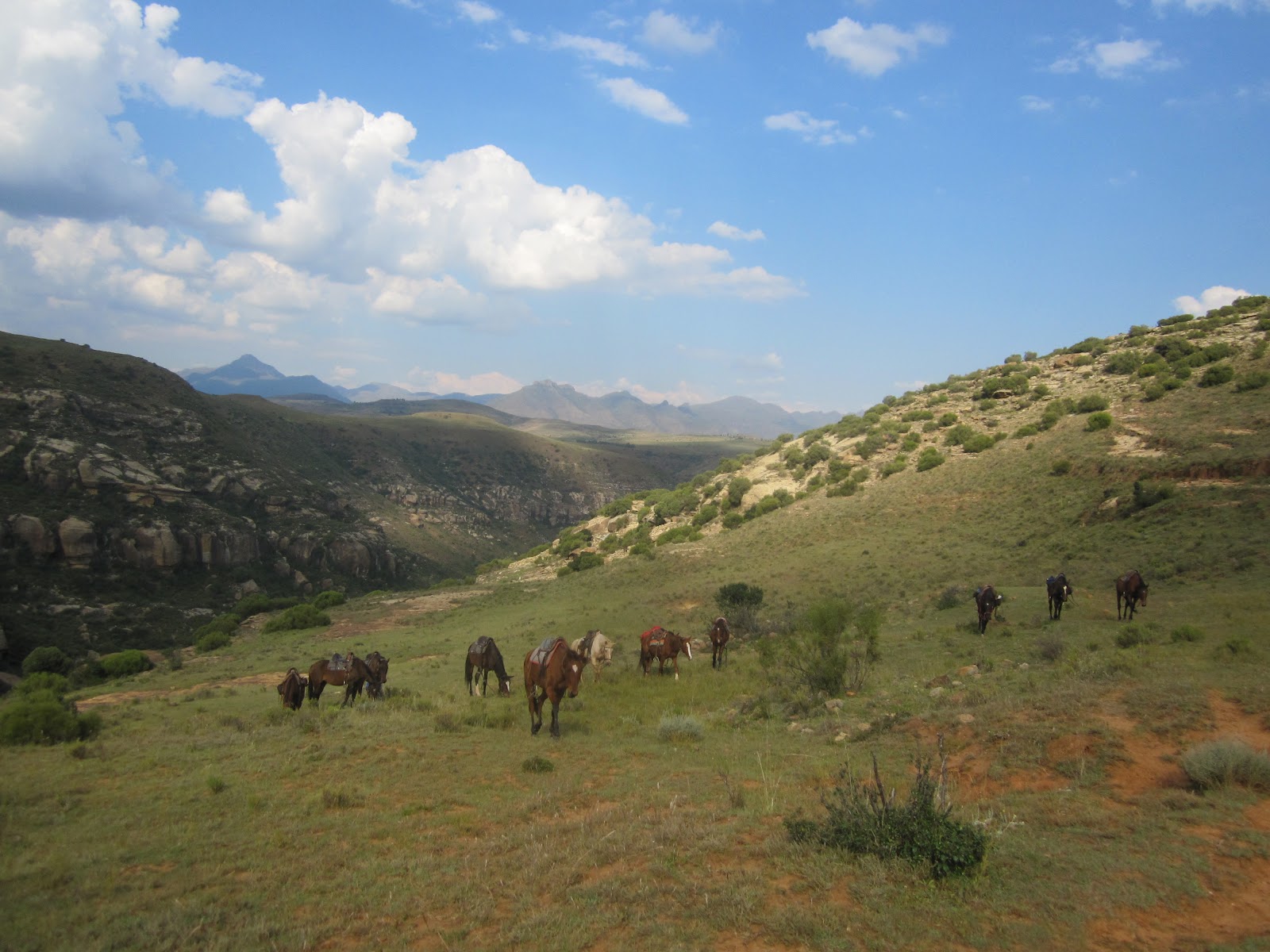
Walking down to the bushman paintings