Tuesday, July 17, 2012

Baie Lekker Holiday! (1 of 2)

Part One: Johannesburg
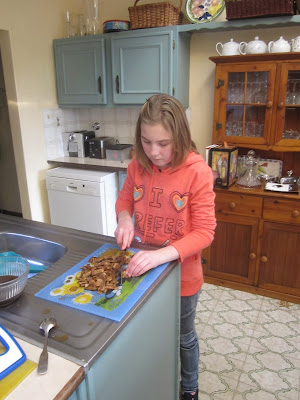
Giulia arrived the last week in June and we had four days in Johannesburg before embarking on the road trip. I enjoyed showing her around Johannesburg and my life here. We went to Wits, Melville, Soweto, Magaliesburg and even a fun drive through Hillbrow. The day after she arrived we went to a local spa, which was quite a treat. There is a definite spa culture in South Africa (compared to the US) and I had to see what all of the “fuss” was about! We also went to the rolling hills of Magaliesburg, about 90 minutes northwest of Johannesburg, for a hot air balloon ride (Giulia’s birthday present). We arrived at the launch site, frost on the ground, and frozen ourselves. To stay warm, we huddled around a heater, drank coffee, and watched the team set up the balloon. It was fascinating to see the balloon take its massive shape. We boarded along with ten other people; the basket was divided into five compartments, two on each side, and a middle compartment for the pilot. We slowly took off – it was so calm and peaceful. The scenery was stunning with farm fields, a reservoir, and mountains in the background (not to forget the smog-covered Johannesburg skyline). We were up for about an hour and then landed in a farm field. To land, a team on the ground had to follow us by truck. We bounced once and then set down before the team ushered the basket to the trailer and took down the balloon. The next day, we had to pack and get last minute supplies for the road trip. In the afternoon we went over to Gerhard and Marlize’s to socialize, finalize the road trip, and make them an “eye-talian” dinner. Giulia and I made saltimbocca (with chicken, we couldn’t find veal), prosciutto and porcini pasta, and apple crisp for dessert. The next morning we set off on our 5200km trek through southern Africa…
Frosty morning before our flight!


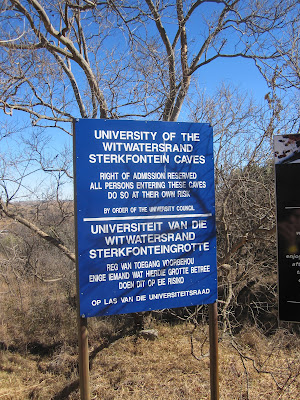
Before heading back to Jo'burg we stopped at the Sterkfontein Caves in the "Cradle of Humankind" (home of the worlds earliest hominids) 


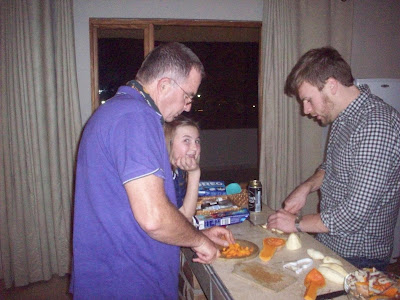
Preparing the "eye-talian" dinner! 
Tasmin helping


Ready to embark...

Part Two: Kimberly, Kalahari, Ai-Ais, & Fish River Canyon

Day 1: Johannesburg – Kimberley (500 km/6 hours)
We set off early driving through the Northwest and Northern Cape provinces to Kimberely, home of the famous diamond pit. Giulia and I enjoyed trying to pronounce the names of the cities we passed (in Afrikaans). Giulia, being the linguist she is, was much more successful! There isn’t much to Kimberely, with the obvious local economy being based on diamond mining. We spent time at the pit trying to grasp its size, watched an informational video about the settlement/discovery, went into the diamond vault (with uncut diamonds) and walked around the old town that they set up as a museum.
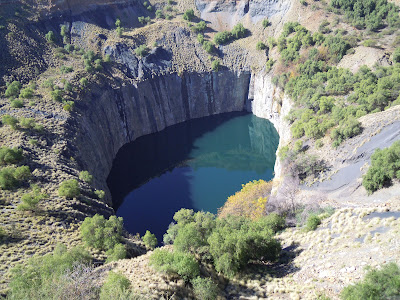


Diamond Pit

Hadida Guest House in Kimberely


Day 2: Kimberley – Upington – Molopo (outside Kalahari) (580 km/7 hours)
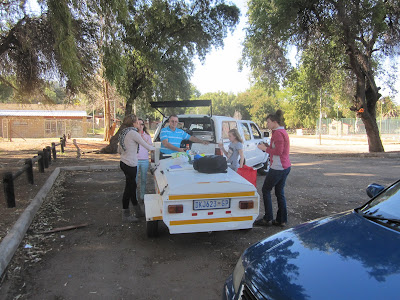
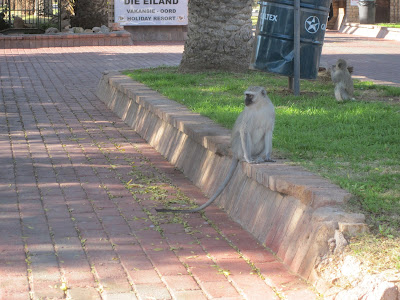
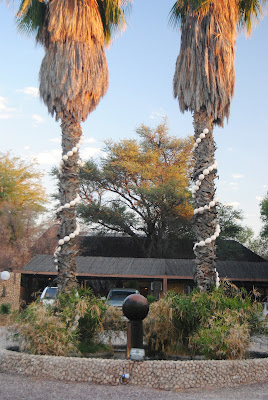
The next day we drove through the Northern Cape, each kilometer getting further from civilization. Interestingly, they were doing road work (much needed, I might add) having only one lane open for long stretches, meaning that we had to wait at queue before we were allowed to drive. It allowed us to get out, stretch our legs, and look in amazement at the beautiful countryside (and the “nothingness”). In Upington we had a makeshift picnic and watched the vervet monkeys scavenge for food at a local park. Onward we continued to Molopo, which is a resort and a “base camp” of sorts for the Kalahari. It is a beautiful resort, with modern amenities, which is truly a feat considering its location. We enjoyed a nice dinner at their restaurant – I had bobotie, a traditional South African dish (Gerhard had kudu bobotie!). 
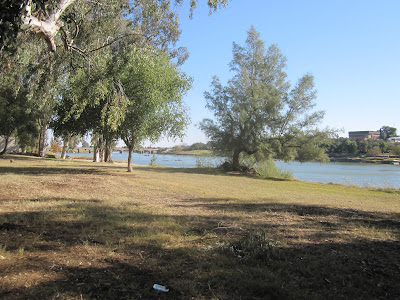


Upington
Picnic in Upington
Vervet monkeys
Molopo Lodge
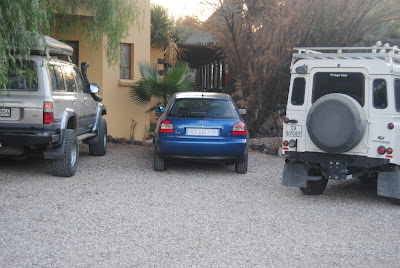
My little car surrounded by bakkies


Day 3: Molopo – Kalahari (camping) (60 km/1 hour)
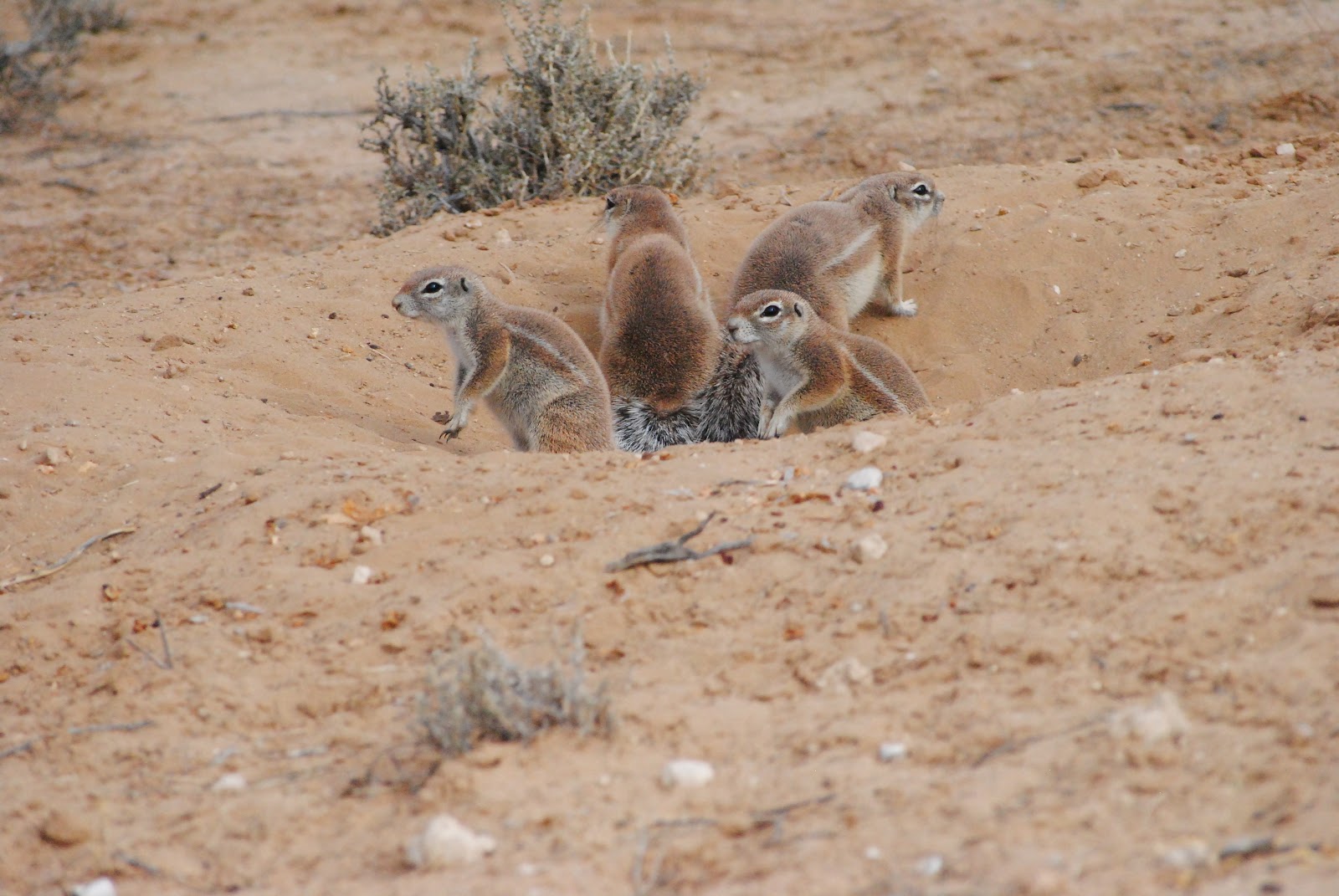
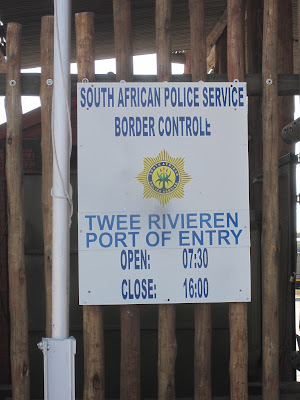
After a good night’s rest, we drove to the Kalahari Transfrontier Park, which is on the South African, Botswana, and Namibian border. With no formal border markings, we had to go through customs of sorts, as we would be traveling into Botswana (and not even know it!). We then went to the campsite to set up our tents before going out to look at the wildlife. The campsite had no electricity, so we were definitely “roughing it” and to make matters worse, the Kalahari is known to get cold at night (particularly since it is winter). After perpetually struggling with the tent (we seem to always confuse the same step when we’ve camped in the past), we finally were settled and set off to explore the park. Interestingly, the rangers advise/request/demand that you get petrol before leaving and lower tire pressure (don’t worry, the ole’ Audi stayed at the camp site – more on that later) because there aren’t many (if any) outposts for petrol. The Kalahari Transfrontier park is massive, the size of Connecticut!

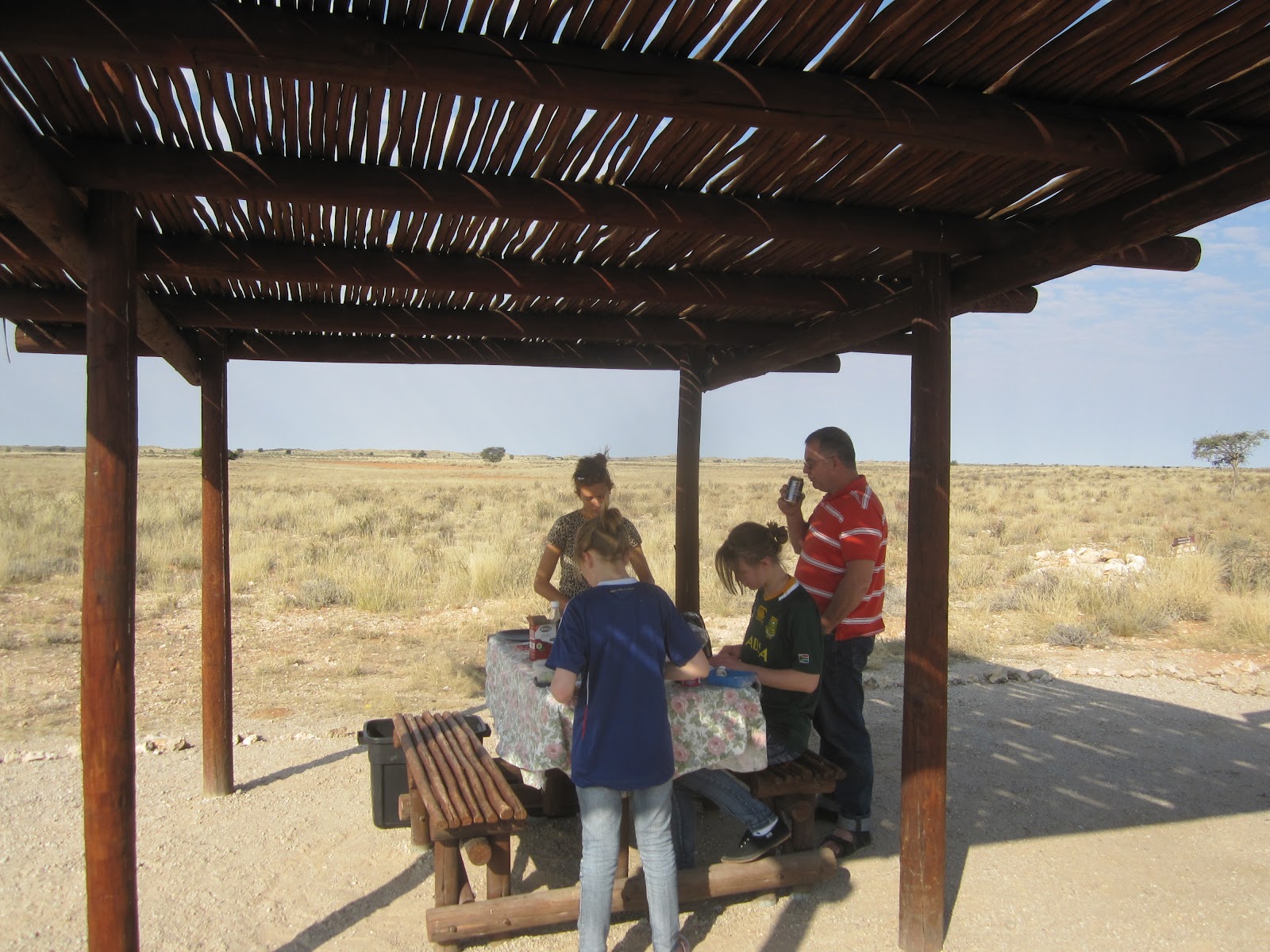
In my mind, when I thought about the “Kalahari” I always associated rolling sand dunes (a la Sahara) and extreme weather. I was surprised to see a lot of brush and grass that foster the wildlife. We drove through the park for a few hours, stopping to make a late breakfast at a rest stop (eggs, bacon, a complete breakfast!) – what a wonderful backdrop to make/eat breakfast. After a long day in the park, we made a lamb potjie over the fire for dinner and huddled around the fire for warmth. It was a long, cold, and stiff night, but we survived!
Kalahari!


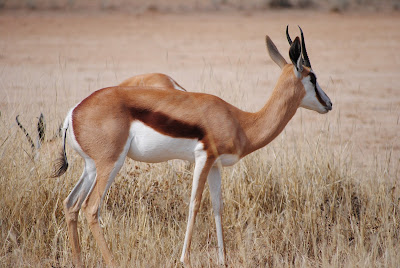
Springbok
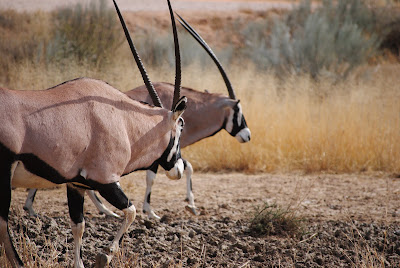
Gemsbok


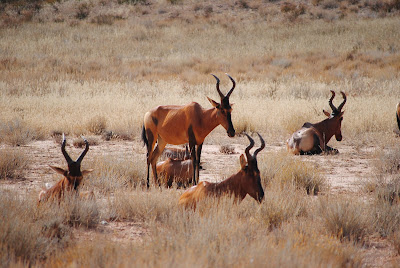
Red Wildebeest

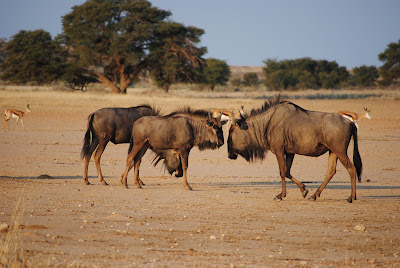
Blue Wildebeest


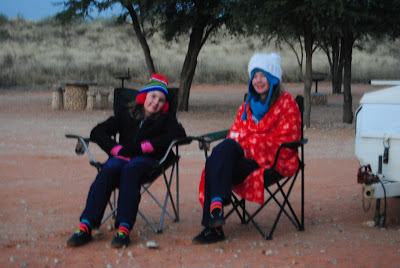
Trying to stay warm!


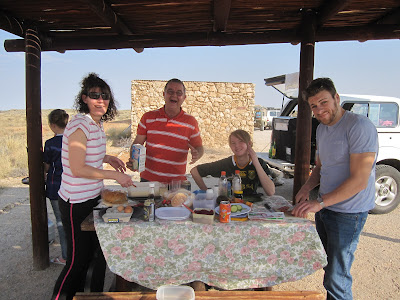
Lunch in the Kalahari

Day 4: Kalahari – Molopo (60 km/1 hour)
The next morning we woke up, slightly frozen and dazed from the night’s cold. We decided to go back out in the park, have sandwiches at a rest area, and then come back to take down the campsite. We were fortunate to see a jackal and followed him (or her) for a while, seeing it hunt in the bush. It was incredible to see the animals in the natural habitat -  the hardships of the Kalahari (landscape and climate). The Kalahari is beautiful and like nothing that I’ve ever seen. The colors and the rawness of the landscape is indescribable and pictures do not do appropriate justice. After taking down our tents, we drove back to Molopo and crashed. 


I fall asleep everywhere...

Back to Molopo


Day 5: Molopo – Ai-Ais (camping) (200 km/3 hours)Day 6: Ai-Ais  
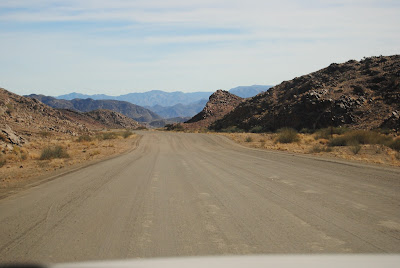
After a good (and warm) night’s rest, we set off for Ai-Ais in southwestern Namibia. We drove through saltpans to Rietfontein, the border post. Odd enough, you had to pay the border fee in a town called Aroub (ah-row-ah-b) some 40 kilometers from the border. I realized right away that we weren’t in South Africa any more because of the roads. There were kilometers and kilometers of gravel road and little else. If you went too fast on the gravel (which seemed to be so thick it was like snow at times), odds are you would come across a small dip and bottom out (what fun!). It was a beautiful landscape, so raw and untouched, but I was often too busy battling with roads and hoping that I wouldn’t “drop a muffler” or other parts of my car. As we neared Ai-Ais, the landscape changed dramatically and we were surrounded by mountains and in time, canyon; the roads changed dramatically too, they were perforated with small bumps so it felt like you were in the dryer. It was all worth it, however, as we came upon the Ai-Ais National Park, situated at the bottom of the Fish River Canyon. “Ai-Ais” means something like “burning water” in Nama, known also for its hot springs. We quickly set up our campsite (with electricity) and headed to the indoor hot springs to relax. It is such a beautiful area, a resort and camping area in the basin of the second largest canyon in the world (sadly enough the resort was washed away during a flood about five years ago).
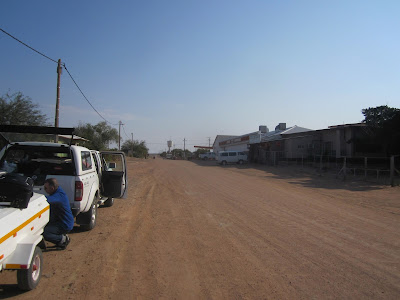


Arouab, Namibia


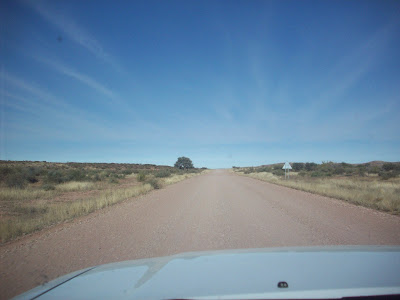
"Nothingness"

Animated Gerhard: "Bloody hell, I love this!"


Heading to Ai-Ais


Off to the hot springs!

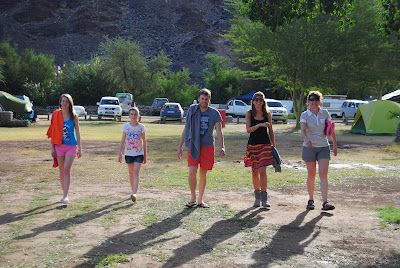
Ai-Ais Resort


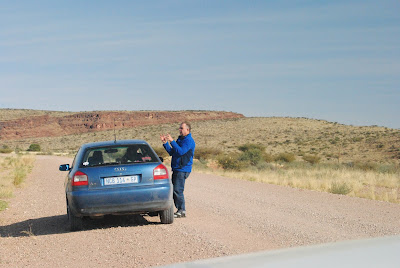
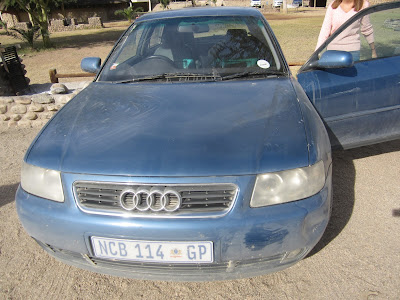
Dusty car...but it made it in one piece!


Day 6: Ai-Ais  
The next morning we woke up slowly and made a hot breakfast (eggs complete with biltong!). Afterward, we set off into the canyon, hiking along the fish river. We spent the late morning/early afternoon hiking and exploring the vegetation and beauty of the park. There is a five day/80km hike from the top of the canyon down to the bottom back to Ai-Ais… it would be an incredible hike! After thoroughly exhausting ourselves, we cleaned up our campsites and checked into the resort. Giulia and I went back to the hot spring and relaxed in the afternoon before making dinner with Gerhard and family. 


Giulia's Hair + Grumpy Scott


Fish River


Making the "All-American" chili

Day 7: Ai-Ais – Cañon Lodge (80km/1.5 hours)
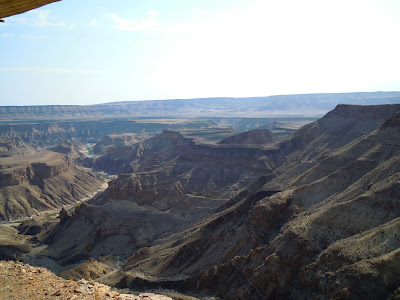
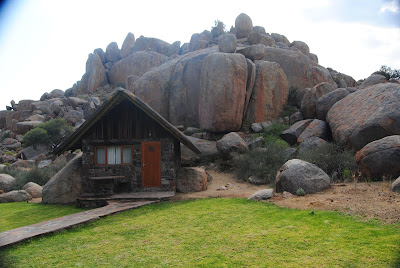
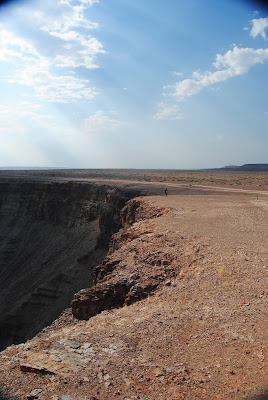
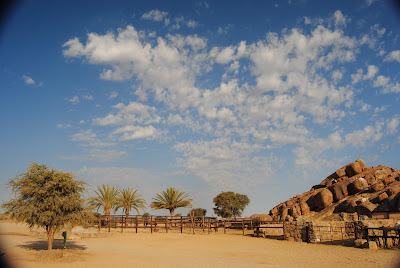
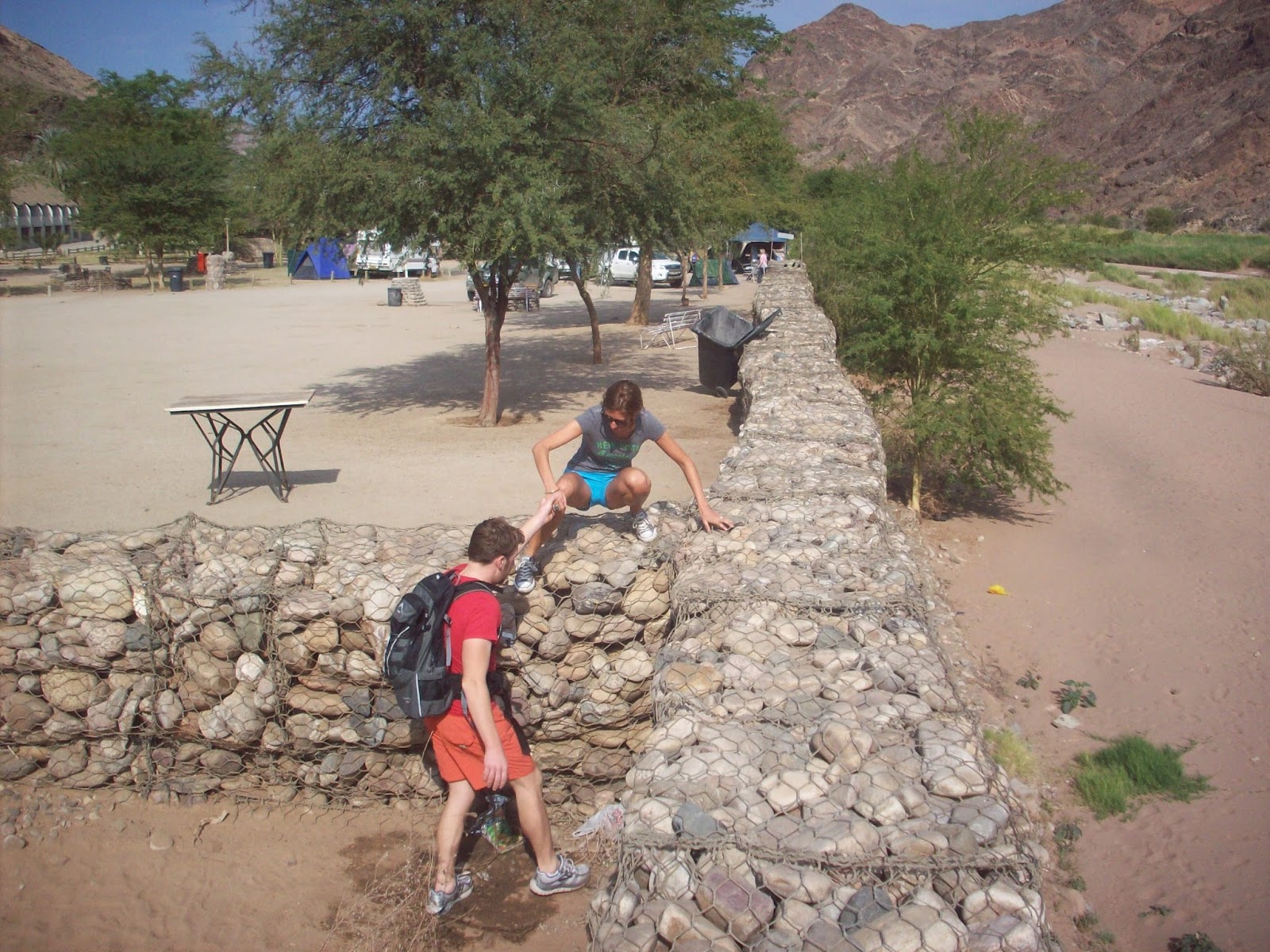
After a wonderful stay in Ai-Ais, we had a 80km trip north, following the canyon to the famous lookout point and were staying in Cañon Lodge (an oasis in the desert). No problem, only 80km? We set off on the bumpy Ai-Ais road and the quality of the road continued to plummet. Battling on, my nerves were tested and at one point I considered making my own road, rather than having to take the main road to the lookout. When we finally arrived to the turn for the lookout point, Giulia suggested that we travel to the Cañon Lodge first, then go together (in Gerhard’s truck) to the lookout point. Relieved and not having to battle the roads for another 20km, we turned around and went back to the lodge (we originally passed the turn off for the lodge, about 2km from where we stopped). Cañon Lodge, is an oasis in the countryside near Fish River Canyon, and is situated in a national park. The landscape is fascinating; it looks as if a giant pilled a stack of stones in the desert. Cañon Lodge designed its 30 freestanding cabins using the rock as part of the architecture (each cabin is different). There were rocks protruding from the walls and they used crevasses to create bathroom spaces or additional bedrooms (hard to describe – see pictures). After checking in, we set off for the Fish River Canyon look out point. It was an incredible, expansive scene of the canyon…breathtaking (hard to describe). We spent time walking around the rim of the canyon before heading back to Cañon Lodge. When we got back to the lodge, we investigated the beautiful resort, climbing on rocks overlooking the pool (and in the distance, nothing!). I’ve never been so far away from civilization. As Giulia said, it’s almost as if you’re deaf, there is no noise whatsoever. Afterward, we dressed up and went to the lodge for a wonderful dinner; it was incredible the variety and freshness of the food, considering our location (it was a great final hooray!). 
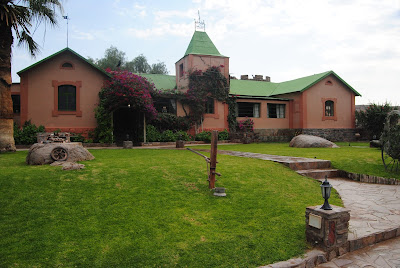
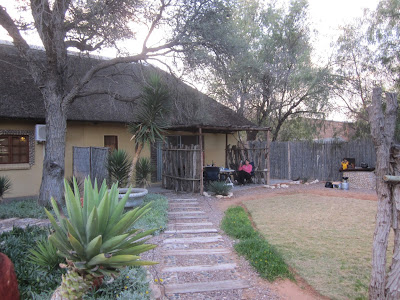
Cañon Lodge


Fish River Canyon


Cañon Lodge chalets


On the edge!


Fish River Canyon look out point


Cañon Lodge 


Final dinner together!

Sunday, June 24, 2012

End of Semester!


This past week was the last of the semester; I spent the week marking my students' examination and finishing up other administrative responsibilities for the semester.

One new development that I am looking forward to next semester is teaching a compulsory course for first-year students called "Becoming a Teacher." I talked to one of the lecturers with whom I work on a research project about my interest in teaching "Becoming a Teacher," not knowing that she is currently teaching the course. Not having taught before, she asked if I would want to switch teaching responsibilities next semester (not teaching before makes teaching "Becoming a Teacher" a bit difficult, she admits). This is a course that I am much more interested in and I feel like I will make a much larger impact teaching this course, rather than "New Literacies for Teachers" (the course I taught last semester). Honestly, I feel that this class has more purpose and is much more influential on the future teachers in the class. The aims of the course are: 1) to explore and clarify conceptions of teaching and learning; 2) to establish foundations for subject-specific methodology by establishing foundations for the development of pedagogical thinking; 3) to enhance the students' abilities to observe and understand classroom teaching, 4) to provide students with models of coherent materials and the opportunities to analyse these learning materials, and 5) to develop a professional teacher identity.

I continued on my documentary-kick, watching Dancing with the Devil this week. It's about the drug trafficking in the favelas (shantytowns) in Rio de Janeiro. Somehow, the filmmakers were able to interview three of the most powerful leaders of the drug-trafficking gangs. The documentary aimed at showing both sides of the "war" on drug trafficking, by interviewing and following Rio de Janeiro police as well. It was really insightful and eye-opening.

Next weekend, Giulia, Gerhard, Marlize, the girls, and I leave for our road trip around Southern Africa. The 4500 km journey will take two weeks - it will be an incredible trip and we'll be able to see much of the country (and Botswana/Namibia). We'll first head to Kimberley (with the large diamond pit), stay the night, and then head north to the Kalahari (see the map for a visual!). The first night, we're staying in a bed and breakfast about an hour away from the park. The second night, we'll camp in the Kalahari Transfrontier National Park (a la Boy Scouts), then stay a night outside of the park in a bed and breakfast. I'm really looking forward to seeing the Kalahari. I read a book called Kalahari Days and Hyena Nights about a scientist who lived in the park and tracked the hyenas (both brown and spotted). Reading the book helped me to picture to landscape and learn more about the amazing wildlife there. From the Kalahari, we head west to Namibia - staying at Ai-Ais, a hot spring near the Fish River Canyon. The next night, we'll go to a lodge near the canyon, which is the second largest in the world aside from the Grand Canyon. Gerhard and family then head home, with Giulia and I traveling down the western coast of South Africa toward Cape Town. We'll stay a night in Paternoster, a beach town on the Atlantic, about two hours north of Cape Town. We're staying two nights in Cape Town (spending a day in Stellenbosch/Paarl to do wine tasting). After Cape Town, we'll head to Oudtshoorn by way of the Garden Route, stopping at Betty's Bay to see the penguin reserve. In Oudtshoorn, we'll ride ostriches, go to the Cango Caves, and pet cheetah/lions at a nature reserve (Giulia's pick!). Before heading to Port Elizabeth, we'll stay a night in Plettenberg Bay, a beautiful little town on the ocean. The next day we'll go to Port Elizabeth and stay with wonderful family friends, Raymond and Sylvia (they/their families were both members of my Great-Grandfather's church in Frankfort, South Africa). Then, we'll head to Addo Elephant Park (there are more than just elephants - it’s a national park!), see the wildlife, and then go on a safari in a private game reserve. The next day, we'll head back to Johannesburg! It should be an incredible trip and I hope that there aren't any unexpected problems. Rest assured: I had the car checked before leaving and I'm a member of the South African Automobile Association!

Map: http://goo.gl/maps/yTIY

During the trip I don't plan on updating the blog, but rest assured, I will write a massive update when we get back.

Starting in Johannesburg and going counter-clockwise

Sunday, June 17, 2012

Jabulani Africa ("Rejoice Africa")

The end of the semester is within sight with my students writing their examination this past week. The examination for the 600 or so first year students was held in the examination hall on campus - a gigantic space with enough desks to accommodate such a large section. I've never seen anything like it: the students wrote the examination for about four hours, of which I proctored, walking up and down the long aisles to ensure that they were using the correct testing booklet, answering questions, and ensuring truthfulness (cheating). This upcoming week I have to grade their examinations (no, not all 600) and then I'm officially on break!

Simple equation: Italian Post + South African Post = Disastrous service. This week I received a note in the mail saying that I had a piece of "registered" mail at the post office waiting for me. Concerned that it was (yet) another speeding ticket, I hesitantly went to the post office to find that it was, in fact, a letter that Giulia sent in mid-April for my birthday (1 May). What made the two-month delay in delivery more ridiculous is that she sent it expedited from Rome (~5 euro for a letter!). 

One aspect of South Africa that I'm continuing to appreciate is the weather. Now, I don’t want you (the reader) to think to yourself, "why do I care about the weather and why is Scott writing about this?" I think weather has a major impact on your life, whether consciously or subconsciously. Winter been in full-swing and although it is cold in the morning, everyday guarantees warmth and sun. It's amazing to me that the sun shines everyday … the lack of sunshine, I feel, is the real issue with winters in the Midwest.

"Encounters: A South African Documentary Festival" is from 12 June to 24 June at the Bioscope Theatre, an independent theatre, downtown in the old manufacturing district of Johannesburg. I was able to catch three films this week: Island President, Progress, and Under African Skies. I thoroughly enjoyed each film and I thought that the Bioscope picked a nice variety to show. The Island President is about (former) President Nasheed of the Maldives and his attempt to bring to light the effect of climate change on his country during the 2009 Copenhagen Conference on Climate Change. With a rising sea level, the Maldives, a chain of 2000 islands at sea level, will predictably be destroyed. The documentary followed him as he campaigned to find consensus among world leaders - and the extraordinary actions he took to help develop the movement. Progress is about a rugby club from Uitenhage (Eastern Cape - north of Port Elizabeth). It chronicled the players' lives, the impact of rugby in their diverse, manufacturing community and their victory over one of the most decorated teams in the country (Stellenbosch, the "Maties"). Under African Skies was about Paul Simon's 25th Anniversary concert in South Africa for his album, "Graceland." The album is highly controversial due to Simon breaking the artist ban in South Africa (he claims to be "invited"). Many South Africans view the album as a way for Simon to take advantage of the situation in South Africa, the end of the Apartheid. The album, recorded with many South African artists, showed the diversity of Simon's songwriting and was well received (in both album sales and awards).

On Saturday, I went with Gerhard and Marlize to Maike and Tasmin's (their daughters) orchestra concert at a local school. Again, I was very impressed with the skill level and diversity of music they performed. It's obvious that the members of the orchestra are passionate about music and the conductor is doing great things. Afterward, I went back to their house for a braai (cookout), watched the South Africa versus England rugby match, and spent the night. It was really nice to spend time with them and relax. Also, we finalized the plans for the road trip (we leave in two weekends) - its amazing that its almost here!

Literature Review: A book that a fellow Fulbrighter recommended that I read is R.W. Johnson's South Africa's Brave New World. I started reading it this week and couldn't put it down. Overall, it chronicles the less-than-fairy tale end of Apartheid with corruption, graft, assassination, and power struggles that are not part of the mainstream notion of the "1994 Election."

The Amazon Book Review writes: "The universal jubilation that greeted Nelson Mandela's inauguration as president of South Africa in 1994 and the process by which the nightmare of Apartheid had been banished is one of the most thrilling, hopeful stories in the modern era: peaceful, rational change was possible and, as with the fall of the Berlin Wall, the weight of an oppressive history was suddenly lifted. R.W. Johnson's major new book tells the story of South Africa from that magic period to the bitter disappointment of the present. As it turned out, it was not so easy for South Africa to shake off its past. The profound damage of Apartheid meant there was not an adequate educated black middle class to run the new state and apartheid had done great psychological harm too, issues that no amount of goodwill could wish away. Equally damaging were the new leaders, many of whom had lived in exile or in prison for much of their adult lives and who tried to impose decrepit, Eastern Bloc political ideas on a world that had long moved on. This disastrous combination has had a terrible impact; it poisoned everything from big business to education to energy utilities to AIDS policy to relations with Zimbabwe. At the heart of the book lies the ruinous figure of Thabo Mbeki, whose over-reaching ambitions led to catastrophic failure on almost every front. But, as Johnson makes clear, Mbeki may have contributed more than anyone else to bringing South Africa close to "failed state" status, but he had plenty of help."

This book really challenged the traditional notion I had (and I believe that many Americans/"Westerners" have) of the end of the Apartheid, Nelson Mandela, and South Africa today. 

Sunday, June 10, 2012

Fulbright Alumni Indaba Conference

With my students "writing" their exams this week and next week, it was a relatively low-key week at Wits (it's odd to say "writing" exams - another South Africanism). I spent time working on a few projects and preparing for a presentation for the Fulbright Alumni Indaba Conference later in the week.

On Thursday morning, Mariann (the other Fulbrighter) and I went to the US Consulate in Johannesburg to be picked up by a State Department bus to take us to the conference. The conference was about an hour northwest of Johannesburg, in Magaliesburg. Magaliesburg is a little village in a mountainous region - a good escape from the city. We (about 300 conference-goers) stayed at Mount Grace Country Home & Spa, a beautiful resort with conference facilities. I had never been to such a resort: each person had their own bungalow (see pictures) and the bungalows were scattered along the hillside, with golf cart tracks for the staff to taxi you to-from your room.

The aim of the conference as to bring together Fulbright Alumni in South Africa, current American Fulbrighters in South Africa, South African Fulbrighters getting ready to study in America, and other Fulbright programs (like President Obama's Young African Women Leadership Initiative). On Thursday, the Fulbrighters in South Africa (from the US) presented their research and/or what they've been doing so far in South Africa. I enjoyed presenting - reflecting on the last five months and refocusing on the next five months. I also appreciated hearing about what my colleagues have been doing in their respective institutions. The remainder of Thursday, all of Friday, and Saturday morning consisted of guest speakers, break-out sessions, and networking. Overall, I was impressed with the caliber of attendees - some of the leading business people and politicians in South Africa. We heard speeches from the former Chief Justice of the South African Supreme Court, the CEO of the South African Football Association, and a famous South African journalist (all alumnae).

In the evenings, after the sessions, I enjoyed talking to the other Fulbright Scholars (both current and former). I spent a good deal of time talking to a researcher from the University of Florida, who busy modeling elephants in Kruger National Park. An engineer by trade, he is setting up computer models to best track and analyze elephants' behavior to maintain biodiversity (elephants are notoriously destructive to the environment). We talked about the "solution" to elephants and maintaining both populations and the environment (elephants are gaining numbers exponentially). Oddly enough, one suggested method is to shoot elephants with chili-filled paintballs, to discourage (and annoy) the elephants from going to watering holes during the day (supposedly they linger and cause more damage). It was also nice to catch up with all of the other ETAs - all of whom were flown in for the conference from Stellenbosch, Port Elizabeth, and Bloemfontein.

Overall, the conference was much better than I anticipated. I wasn't too terribly excited to go (except to see everyone), but I feel like it was worthwhile and helped me to refocus.

And…Forza Azzurri! (Euro 2012 Soccer has begun, exciting!)


Sunday, June 3, 2012

T.I.A. Bru (This is Africa)

This week was the last week of classes and my students have two weeks of examinations before the winter break. Unfortunately, I cannot stay with my class next semester; although the students are still in the same (overall) class, they have to move to a different lecturer. Unlike American university students who are typically encouraged to express their views, ask questions, and even debate in class, I notice that South African university students are much more hesitant to participate (possibly due to the British-style education system?). In any event, I felt that in the last few weeks I had a "breakthrough" with my class. My students were comfortable opening a dialogue with the entire class, participating, and even debating one another. I think it is incredibly important, especially at "varsity" (university), to be active in learning - questioning, debating - overall, challenging yourself.

I spent the latter half of the week working on applications for next year, both from January - August (before London School of Economics) and possible positions beyond the nine months … My overall thought: why not apply? As my grandfather always said, and my grandmother reiterates, "you won't catch any fish if you don't throw out a line."

On Friday night, I went over to Micah's house, a South African who is dating a Johannesburg Fulbrighter (Ryan). He lives in a beautiful, modern home on top of a hill in Parktown, which overlooks the city. It was great to socialize with the other Fulbrighters and Micah's South African friends. Interestingly, Micah's father was a political refugee in Rhodesia during the Apartheid government. Micah was born in Salisbury (Harare, Zimbabwe) and his family returned to South Africa after the end of Apartheid (I blogged about him a few months ago when we went to see the documentary: Robert Mugabe…What Happened?).

I taught on Saturday…"stick shift." Mariann (my fellow Fulbrighter) is renting a car when her friend comes to visit during winter break. Fun side-note: Her friend is on the same flight as Giulia from Cairo to Johannesburg. With manual transmissions being the overwhelming choice in South Africa, it is very expensive to rent an automatic (nearly double the cost of a manual). So, we spent Saturday afternoon driving around Houghton, a beautiful neighborhood near Wits, and the same neighborhood that had the "Hogwarts" looking school that I did my teacher observations. She did really well! We practiced: first to second, third back to second (downshifting), easing up to cars, and even hills (accidentally). I think that we'll have a few more lessons, but she's almost a professional now! Overall, I think once you understand the concept and what you're doing to the car, it just takes practice (and a little bit of confidence). It's amazing to me to think that I've been driving a manual car for nine years! Mariann asked, "so why did you get a manual for your first car?" I replied, "Well, my sister told me that if I was going to be a man, I should drive manual." J I remember the first time I drove manual by myself: I was taking my car off the lot at Yark Nissan. Rather than try to turn left to head to McCord Road, I turned right to go by way of Holland-Sylvania (still nervous to drive manual by myself). Well, I pulled out with my emergency brake up and I stalled at the light (South African: "robot"), only to have a truck-full of construction workers laugh at me (or was it with me?).

Sala Kahle! (Sa-lay Ga-h-lay … "Stay Well") 

A fun South African diversity advertisement (surprisingly, for a fast-food chicken place): http://www.youtube.com/watch?feature=player_embedded&v=_R7vu9SuxaQ